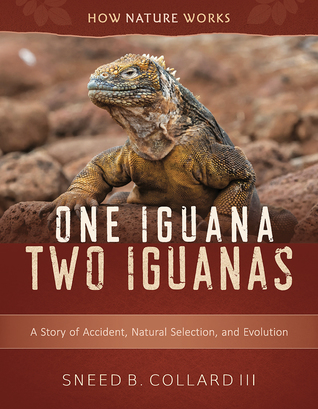
Six hundred miles (1,000 km) off the coast of South America, almost exactly on Earth’s equator, a charcoal-colored lizard sits on a ashore of jagged lava rocks. The lizard is a marine iguana, and with its dark skin and bumpy head, it looks like it could have been carved from lava itself.
Synopsis:
Natural
selection and speciation are all but ignored in children’s nonfiction. To help
address this glaring deficiency, award-winning children’s science writer Sneed
Collard traveled to the Galapagos Islands to see for himself, where Charles
Darwin saw, how new species form. The result is this fascinating story of two
species of iguana, one land-based and one marine, both of which developed from
a single ancestor that reached the islands millions of years ago. The animals
evolved in different directions while living within sight of one another. How
is that possible?
Why I like this book:
The
Galapagos Islands are hosts to many types of lizards and other flora and fauna.
It is on my bucket list to see, not only for the wildlife but because of its
Darwinian fame. It is a fascinating place. This text takes a challenging
subject that some adults struggle to comprehend and breaks it down into simple,
sequential bit-sized chunks of information. It is a fun, fascinating and educational
read. I honestly would also use this in a middle school classroom to introduce
the important topic. The author notes at the end that some information is still
missing to scientists, but this is from the best knowledge that scientists have
gathered and researched about natural selection, adaptation and evolution
Reptile-loving
kids will particularly enjoy the historical beginning of lizards and their
habitats. The photography is stunning, of not just lizards but birds, crabs,
turtles and various types of vegetation. This is a stellar addition to your
science shelves and fills a much needed gap. (See what I did there? J)
Activities/resources:
Parents
and teachers will want to use this succinct tool to teach science, natural
selection, evolution and adaptation to their children. The back of the book
contains a glossary, and more information about Darwin and evolution with additional
sources for further study.
Each week a group of
bloggers reviews picture books we feel would make great educational reads. To
help teachers, caregivers and parents, we have included resources and/or
activities with each of our reviews. A complete list of the thousands of books
we have reviewed can be found sorted alphabetically and by topics, here on Susanna Leonard Hill’s website.
Folks, it has been a few months since my last illustrator interview so I thought it would be fun to start with a bilingual one – with Giuliano Ferri. I recently “read” his wordless picture book, BRICK BY BRICK (English title) and loved it so much I reached out to his American publisher for this book, who was happy to put me in touch with him. And I hope Giuliano will bear with my amateur translation. But doing it in two languages gives it a wider audience.
[JM] Illustrator or author/illustrator? If the latter, do you begin with words or pictures?
Sono un “Illustr-Autore” a parte il gioco di parole io nasco come illustratore ma quasi subito io ho iniziato anche a scrivere storie. In questi ultimi anni pubblico quasi esclusivamente storie da me scritte e poi da me illustrate. Direi che quasi sempre inizio con un’idea che si trasforma prima in parole e poi in illustrazioni, anche se quando immagino un personaggio o delle ambientazioni io riesca già a vedere come le realizzerò graficamente.
[GF] I’m an author/illustrator – aside from word play, I was born as an illustrator but almost immediately I started writing stories too. In recent years, I have almost exclusively published stories written and then illustrated by me. I would say that almost always I start with an idea that first turns into words and then into illustrations, even if when I imagine a character or the settings I can already see how I will make them graphically.
[JM] Where are you from/have you lived and how has that influenced your work?
Io sono nato e abito a Pesaro, in una regione del centro italia. E’ una zona molto bella con paesaggi che cambiano tanto in pochi chilometri. Con un’ora di automobile si passa dal mare alla montagna passando per dolci colline. E’ un paesaggio che assomiglia molto alla Toscana. La mia regione si chiama è Marche ed una delle sue città storicamente più importanti è Urbino, città Rinascimentale dove vi è nato Raffaello e dove tanti maestri del Rinascimento italiano vi sono passati.
Fiorenzuola di Focara
Nelle mie illustrazioni molto spesso i miei lettori possono vedere i paesaggi e le piccole città che io ho ripreso dai luoghi della mia regione. Le sue colline sembrano disegnate da un bambino, hanno delle forme incredibili e i paesi sono formati da case in pietra abbarbicate una sopra l’altra. Hanno un sapore di antico e di fiabesco! Non potevo non rappresentarle nelle mie illustrazioni!
[GF] I was born and live in Pesaro, in a region of central Italy. It is a very beautiful area with landscapes that change a lot in a few kilometers. I one hour’s drive you pass from the sea to the mountain and through rolling hills. It is a landscape that looks a lot like Tuscany. My region is called Marche and one of its most historically important cities is Urbino, a Renaissance city where Raphael was born there and where so many masters of the Italian Renaissance spent time.
Very often in my illustrations, my readers can see the landscapes and the small cities that I have taken from places in my region. Its hills seem to be designed by a child, they have incredible shapes and the scenery is scattered with stone houses clinging on top of each other. They have both an ancient and fairytale flavor! I couldn’t not represent them in my illustrations!
[JM] Tell us a little of your beginnings and journey as an artist.
Io ho studiato all’Istituto Statale d’arte diplomandomi in Disegno Animato. Ma fin dai primi anni di scuola per me era chiaro che io volessi fare l’illustratore. Mi ricordo che una volta, ancora studente, entrai in una libreria di Firenze dove sfogliai per caso un libro illustrato di Lisbeth Zwerger, illustratrice austriaca, e la prima cosa che pensai fu “Io voglio diventare un illustratore!” Ma il mio inizio artistico no fu semplice. I primi anni di scuola non riuscivo a trovare una mia strada artistica ed i miei insegnanti erano disperati! Poi un giorno disegnai un vecchio scarpone di cuoio. In particolare mi soffermai a riprodurre il colore del cuoio invecchiato utilizzando l’acquerello. Il risultato mi piacque così tanto che decisi di vestire alcuni personaggi di cuoio e nacquero i tarocchi. E iniziai così a trovare una mia strada! Finita la scuola l’impatto con il mondo del lavoro fu altrettanto difficile. Il mondo dell’editoria sembrava qualcosa di inarrivabile. Poi l’incontro con due grandi maestri dell’illustrazione come Giacinto Gaudenzi e Stepan Zavrel è stato per me fondamentale. Essi, con i loro consigli hanno saputo darmi la chiave per capire come rendere la mia arte “pubblicabile” e di questo gliene sarò eternamente grato!
[GF] I studied at the State Institute of Art, graduating in Animation. But from the first years of school it was clear to me that I wanted to be an illustrator. I remember that once, when still a student, I entered a bookshop in Florence where I leafed through an illustrated book by Lisbeth Zwerger, an Austrian illustrator, and the first thing I thought was, “I want to become an illustrator!” But my artistic beginning wan’t easy. The first years of school, I could not find my artistic path and my teachers were desperate! Then one day I drew an old leather boot. In particular I took time to reproduce the color of aged leather using watercolor. I liked the result so much that I decided to dress up some leather characters, and some tarot cards were born. And so I started to find my own way! Finding my way in the work place was equally difficult after school. The publishing world seemed something unattainable. A meeting with two great masters of illustration, Giacinto Gaudenzi and Stepan Zavrel, was a turning point for me. They, with their advice have been able to give me keys to understand how to make my art “publishable” and for this, I will be eternally grateful!
[JM] What is your preferred medium to work in?
La mia tecnica pittorica è l’acquerello su foglio bagnato. Ma spesso intervengo anche con matite più o meno morbide e matite e carboncini colorati.
[GF] My painting technique is watercolor on damp paper. But I often also work with more or less soft pencils, and colored pencils, and charcoal.
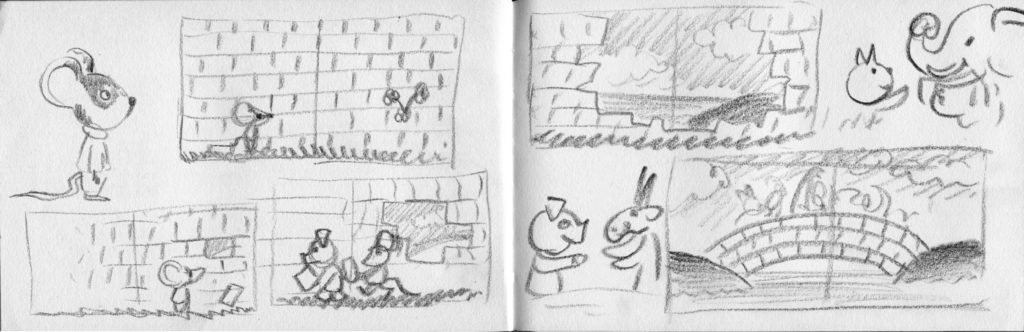
[JM] Can you share a piece or two for us, maybe from a Work in Progress, and the process of creating them?
La cosa più difficile è trovare l’idea! L’idea è qualcosa di miracoloso, arriva quando meno te l’aspetti, è un attimo, una frazione di secondo e qualche cosa si accende nella testa. Poi la costruzione della storia è qualcosa di artistico ma dove è importante anche l’esperienza. Una volta trovata la storia inizio lo studio dei personaggi e dell’ambiente. Poi una tappa fondamentale per la buona riuscita di un libro illustrato: lo Story-board ovvero lo studio delle immagini del libro che devono essere studiate insieme così che nel libro ci sia armonia ed equilibrio. A questo punto passo alla colorazione delle illustrazioni.
[GF] The hardest thing for me is coming up with the idea! The idea is something miraculous, and it comes when you least expect it— a moment, a fraction of a second and something pops into your head. Then the construction of the story is something artistic but where experience is also important. Once the story is birthed, I begin to study the characters and the environment. Then a milestone for the success of an illustrated book: the Story-board or the collaboration of the images of the book that must be studied together so that in the book there is harmony and balance. At this point, I move ont to the coloring of the illustrations.
Bozzetto Libro del Muro
Disegni appesi alla libreria
[JM] Which book do you remember buying with your own money as a kid?
Un libro a cui sono molto legato è una raccolta di fiabe classiche dei fratelli Grimm, in particolar modo la fiaba di Cappuccetto Rosso, ma non l’ho comperato con i miei soldi ma era di mia sorella. Con i miei soldi il primo libro che ho comperato era un fumetto di Spiderman. Ai libri illustrati ci sono ritornato quando ero più grande.
[GF] A book that I am very attached to is a collection of classic fairy tales by the Brothers Grimm, especially the fairy tale of Little Red Riding Hood, but I did not buy it with my money; it was my sister’s. With my money, the first book I bought was a Spiderman comic book. I returned to the illustrated books when I was older.
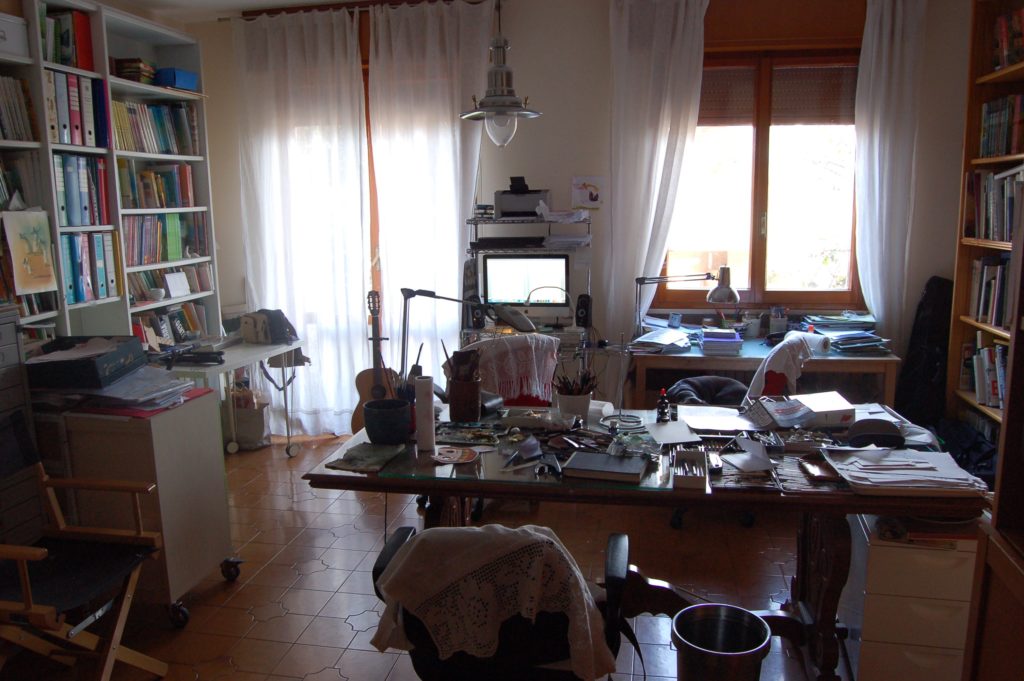
[JM] What does your workspace look like?
Io lavoro in una stanza all’interno della casa in cui vivo. E’ quindi uno studio molto “vissuto”, cioè avendo io tre figli come potete immaginare è sempre molto frequentato. Questo ha aspetti negativi ma anche positivi. Sicuramente è un po’ difficile potersi concentrare, ma i miei figli hanno l’età dei lettori dei miei libri. Quindi sono i miei primi giudici. Quando ho un nuovo progetto sono i primi a cui lo mostro. Anche quando guardano i miei disegni spesso mi danno dei suggerimenti sempre molto preziosi.
IL MIO STUDIOIL MIO TAVOLO AL LAVOR
[GF] I work in a room in my home. It is therefore a very “lived in” study, in that having three children, as you can imagine, the room is always very popular. This has negative but also positive aspects. Certainly, it’s a bit difficult to concentrate, but my children are the age of the readers of my books. So they are my first judges. When I have a new project, they are the first I show it to. Even when they look at my drawings, they often give me very precious suggestions.
I miei figli – Alice – 11, Luca – 6, Miriam – 9
[JM] I love your wordless board book, Brick by Brick, can you tell us what inspired this one??
Questo libro parte da uno spettacolo teatrale che ho scritto e realizzato nel 1991 con un gruppo di attori alcuni dei quali con disabilità psichica. In quel caso lo spettacolo parlava di due castelli separati da un fiume e perennemente in guerra tra loro. Ma nel finale, grazie alla mediazione di un principe di un castello e della principessa dell’altro castello, gli abitanti hanno iniziato a smontare le mura dei castelli, utilizzando i mattoni per costruire un ponte che unisse i due regni. Il quel caso il muro da abbattere era quello della fatica ad accettare chi è diverso. Pensai che l’abbattere muri fosse un concetto importante che anche un bambino avrebbe potuto comprendere e realizzai questo progetto.
Finii il progetto proprio durante il periodo della polemica tra il Papa ed il presidente Trump circa il muro con il Messico. Quando il mio editore Michael Neugebauer vide il progetto lo volle realizzare immediatamente.
[GF] This book evolved from a theatrical show that I wrote and directed in 1991 with a group of actors, some of them with mental disabilities. The show spoke of two castles separated by a river and perpetually at war with each other. But in the end, thanks to the mediation of a prince of a castle and the princess of the other castle, the inhabitants began to dismantle the walls of the castles, using bricks to build a bridge that would unite the two kingdoms. In this case, the wall needing to be demolished was that of the effort needed to accept those who are different. I thought that knocking down walls was an important concept that even a child could understand and hence developed this project.
I completed the project precisely during the period of the controversy between the Pope and President Trump about the wall with Mexico. When my publisher Michael Neugebauer saw the project, he wanted to do it immediately.
[JM] What artwork do you have hanging in your home?
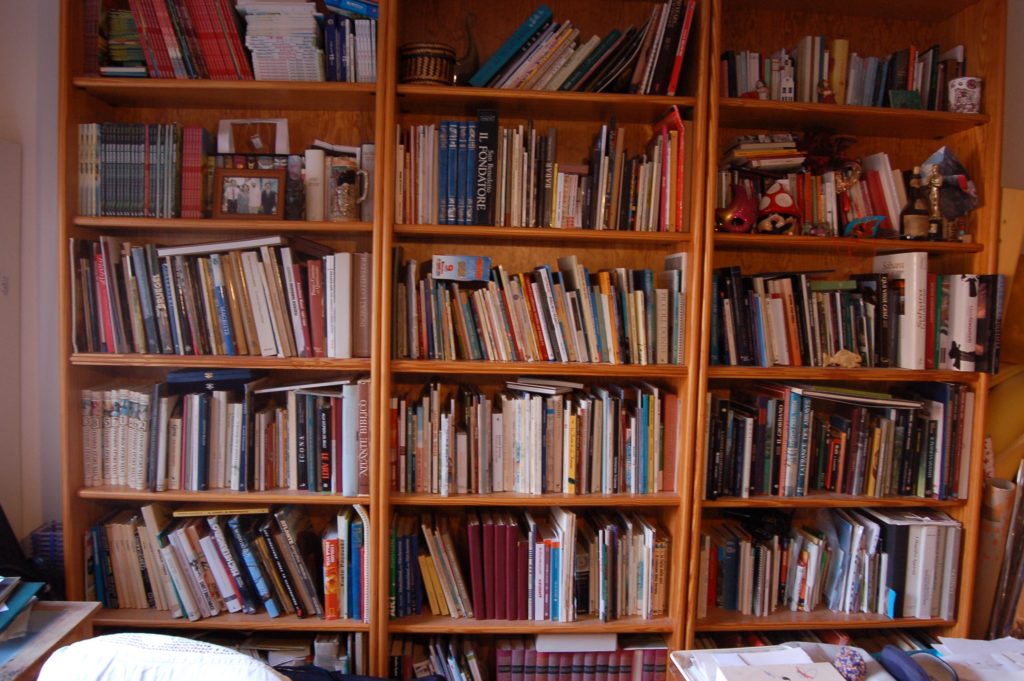
Nel mio studio in gran parte ho i disegni dei miei figli, ma non ho molto spazio per appendere cose perchè ho poche pareti a disposizione dal momento che ho librerie un po’ su tutte le pareti. Infatti quando realizzo un libro e voglio appendere le mie illustrazioni appena realizzate sono costretto ad attaccarle alla libreria. Invece nelle altre stanze della casa è mia moglie che si occupa di appendere immagini. Ci sono molte mie illustrazioni e illustrazioni di altri artisti a cui siamo molto affezionati.
[GF] In my studio, I mostly have drawings my children have done, but I do not have much space to hang things because I have a few walls available since I have bookcases on all the walls. In fact, when I make a book and I want to hang up my newly created illustrations, I have to stick them to the bookshelves. It’s my wife who takes care of what we have on the walls elsewhere in the house. There are many of my illustrations and illustrations of other artists we are very fond of.
Bookshelves in my studio
[JM] Is it easier to create a wordless picture book for you?
Non saprei. Dipende dall’idea e dalla storia. Forse la storia che si racconta solo con immagini può richiedere all’illustratore un impegno maggiore, dovendo sempre rappresentare immagini che si raccontino da sole senza l’aiuto delle parole. Ma penso che infondo questa ricerca l’illustratore la realizza sempre, anche quando illustra un libro che abbia un testo.
[GF] I don’t know. It depends on the idea and the story. Perhaps the story that is told only with images demands a greater commitment from the illustrator, always having to represent images that speak for themselves without the help of words. But I think that an illustrator always seeks this depth of representation, even when he illustrates a book that has a text.
Five Fun Ones to Finish?
[JM] Which is your favorite park (state/urban…) in the world?
Sono tanti i posti che amo ma in particolare c’è un luogo che io ritengo magico: LE TRE CIME DI LAVAREDO. Situato sulle Dolomiti, le meravigliose montagne del nord Italiadal tipico colore rosa. Quando posso con la mia famiglia vado a fare delle meravigliose escursioni intorno alle Tre cime di Lavaredo.
[GF] There are many places I love, but in particular there is a place that I consider magical: THE THREE TOPS OF LAVAREDO. Located in the Dolomites, the wonderful mountains of northern Italy with their characteristic pink color. I go whenever I can with my family for wonderful hikes around the Tre Cime di Lavaredo.
Le Tre Cime di LavordeoThe whole family in the Dolomites
[JM] I spent a couple of weeks hiking in the Dolomiti when I lived in Nice, and loved it. Cats or dogs?
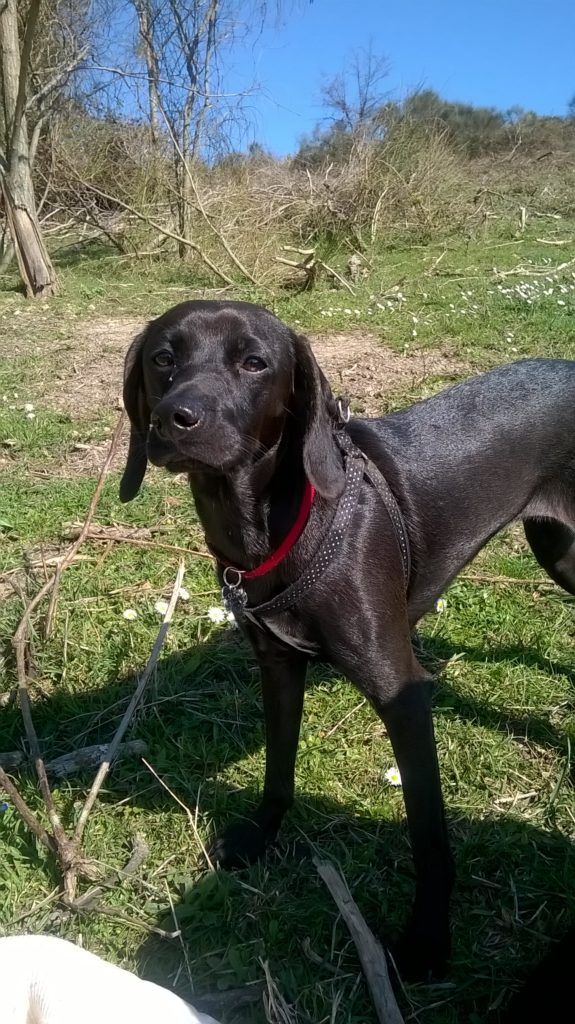
2 gatti (Minnie e Chicco) e un cane (Susy). Ma i miei figli sostengono che abbiamo anche un riccio e tre rospi, che effettivamente gironzolano spesso nel nostro giardino ma sono liberi di andare o venire!
[GF] 2 cats (Minnie and Chicco) and a dog (Susy). But my children claim that we also have a hedgehog and three toads, which actually roam often in our garden but are free to come or go as they please!
My Cat, Chicco
La mia cagnolina, Susy
[JM] What a wonderful menagerie. Please recommend a coffee shop or restaurant for me to visit in your city/town!
Il bar-pasticceria del mio quartiere “Loreto” dove fanno delle brioches meravigliose e il ristorante di pesce da Gennaro situato nel Parco del Monte San Bartolo. Una collina a picco sul mare. Si mangia dell’ottimo pesce ed è in un paesino a picco sul mare.
[GF] My neighborhood bar/bakery, “Loreto”, where they make wonderful brioches and also the fish restaurant from Gennaro, located in the Park of Monte San Bartolo. A hill overlooking the sea. You eat excellent fish here and it is in a village overlooking the sea.
Ristorante del Gennaro
[JM] Giuliano, I am a fish-fan! I know Molise but not the Marche region, so I need to visit. What was your first paid job out of high school?
Durante la frequentazione dell’istituto d’arte non ho mai fatto lavori retribuiti. Però le mie illustrazioni, raffiguranti i Tarocchi, sono “scomparsi” dall’archivio della scuola e voci non confermate asseriscono che siano finiti appesi su qualche parete di casa di qualche professore della mia scuola!
[GF] I didn’t have any paid jobs while attending the institute of art. But my illustrations, depicting the Tarot, have “disappeared” from the school archive and unconfirmed rumors suggest that they ended up hanging on some house wall of some professor of my school!
[JM] Go to snack/drink to sustain your creative juices?
Di solito a metà mattinata mangio una mela mentre nel pomeriggio, specialmente d’inverno bevo molte tisane calde, perchè la tisana è come una mamma, ti coccola!
[GF] Usually mid-morning I eat an apple while in the afternoon, especially in winter, I drink many cups of hot tea, because tea is like a mother, it pampers you!
[JM] Giuliano molto grazie. Thank you for sharing a little of your art and your beautiful corner of the world with us.
Giuliano has illustrated and/or written over 75 books for children, check them out here.
Publisher: US Publisher – Enchanted Lion Books, 2018 (also the translator)
Ages: 3-7
Themes: childhood friendship, affection, being understood, gender stereotyping, love
Opening:
He always holds my hand, It’s true. Very tight.
Synopsis:
This story follows a little boy named Raphael, whose daily rhythm is steeped in his immense affection for his friend Jerome. The two boys share jokes and snacks and plan future adventures to the Himalayas. Even when Raphael’s constant talk of Jerome is driving his parents crazy, he remains steadfast: “Raphael loves Jerome. I say it. It’s easy.” And the truth is, when he’s with Jerome, Raphael feels happy, liked, and understood? even special.(publisher)
Why I like this book:
Honoring the intensity of friendship, and, yes, maybe a friendship which could eventually turn into romance, is a lovely thing to normalize. Another aspect of the book I really appreciate is portraying boys’ friendships as loving, and not just rough and tumble, as is often the stereotype. Tallec’s tender illustrations keep Raphael and Jerome at the center of each page. People and settings are spare, but perfectly express the emotions and situations. Society and parents may resist his level of intense childhood love, but that is not going to stop our young narrator expressing it.
This book is very precious and so authentic. The abundance of love and the lack of doubt or insecurity over it – no matter outside forces – is so beautiful. For me, the author expressed that “in ;ove” feeling, when you love every fiber of another’s being, holding nothing back. This author does such beautiful gentle justice to the extent of this emotion. Oh, to adore and be adored and to want to tell the whole world about it. Just beautiful! I have been a fan of Tallec’s work for a while and interviewed him on the blog a couple of years ago. I was thrilled to encounter this French author, Thomas Scotto, whom I discovered is a celebrated author in the French youth literature scene.
It doesn’t bother me at all. Raphael loves Jerome. I can say it. It’s easy.
Et voilà le titre en français
Resources/Activities: Maybe encourage your students to write a poem about their best friend(s).
This post is part of a series by authors and children’s literature bloggers called Perfect Picture Book Fridays. For more picture book suggestions seeSusanna Leonard Hill’s Perfect Picture Books.
In my 20's, with only my guitar and a rucksack, I wandered the continents, immersing myself in the lives of some wonderful people, projects and stories, which changed the way I view my responsibility to others and this earth. Right now I'm a European transplant in the US who writes books for children and young adults. Stories can help us not only navigate our world but can connect us to others, and allow us to inspire and help each other. I believe that equity and empathy should be at the core of our all actions, words, and stories.
I am also a school librarian and I get a kick out of book-matchmaking! And I use the pronouns she/her.










 In my 20's, with only my guitar and a rucksack, I wandered the continents, immersing myself in the lives of some wonderful people, projects and stories, which changed the way I view my responsibility to others and this earth. Right now I'm a European transplant in the US who writes books for children and young adults. Stories can help us not only navigate our world but can connect us to others, and allow us to inspire and help each other. I believe that equity and empathy should be at the core of our all actions, words, and stories.
I am also a school librarian and I get a kick out of book-matchmaking! And I use the pronouns she/her.
In my 20's, with only my guitar and a rucksack, I wandered the continents, immersing myself in the lives of some wonderful people, projects and stories, which changed the way I view my responsibility to others and this earth. Right now I'm a European transplant in the US who writes books for children and young adults. Stories can help us not only navigate our world but can connect us to others, and allow us to inspire and help each other. I believe that equity and empathy should be at the core of our all actions, words, and stories.
I am also a school librarian and I get a kick out of book-matchmaking! And I use the pronouns she/her.